How to Run a SaaS Win-Back Campaign for Inactive Users
In short: how to run a SaaS win-back campaign for inactive users usually means targeting the right inactive segment with the right trigger, channel, and…
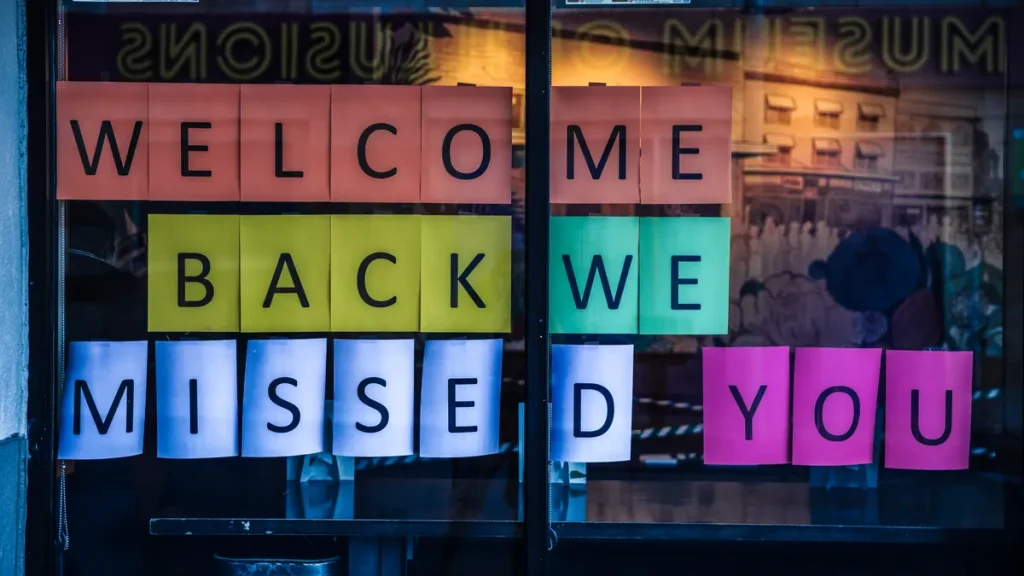
Window sign saying welcome back we missed you
Last updated: October 13, 2026
In short: how to run a SaaS win-back campaign for inactive users usually means targeting the right inactive segment with the right trigger, channel, and timing, not sending one blanket message to everyone. A practical first pass is a three-touch sequence over 10 to 14 days, with 30-, 60-, and 90-day inactivity buckets. If you are unsure how to define inactivity for your business, consult a retention professional; HubSpot’s lifecycle email guidance and the Recurly blog are useful starting points, but they are not a substitute for your own product data or professional advice. The goal is not a sentimental “we miss you” email; it is a short, specific message that removes the friction that made the user go quiet in the first place.
Key Takeaways
- A good win-back flow targets past users who stopped for a fixable reason.
- Strong campaigns match the message to the user’s actual inactivity state.
- Segmented flows usually outperform one-size-fits-all sends when you can support them.
- Keep the message brief, reduce friction, and time it to recent meaningful activity.
I write about SaaS retention and lifecycle messaging, so I judge how to run a SaaS win-back campaign for inactive users the way a product team should: by fit, timing, and operational cost, not by wishful thinking. If the account is gone because the product never solved a real job, no campaign will save it. If the account went quiet because of onboarding friction, missing integrations, budget timing, or a paused project, a focused win-back can earn attention again.
What a good SaaS win-back campaign is actually for
A good SaaS win-back campaign is for users who already understood the product once, but stopped using it for a fixable reason. That is the whole point. It is not for broad re-engagement theater, and it is not for blasting the entire churned database with one coupon.
The practical job is narrow: identify people whose last meaningful use is old enough to matter, but not so old that the product has become irrelevant. In SaaS terms, I would usually start with segments like 30-, 60-, and 90-day inactivity, then split again by lifecycle stage: trial no-shows, low-usage paying customers, cancelled customers, and downgraded accounts. A 90-day inactive power user needs a different message from a 14-day trial user who never connected a second integration.
The campaign wins when it names the likely cause of drift. If usage dropped after a teammate left, say so. If the user never completed setup, own that. If a feature gap pushed them out, acknowledge the gap and point to a workaround, not a fantasy. That is what makes the outreach believable.
The main trade-off is volume versus relevance. The broader the audience, the cheaper the send, but the weaker the message. I would rather send 500 messages that match the segment than 50,000 that sound generic. The generic approach burns sender reputation, wastes sales follow-up time, and trains inactive users to ignore future lifecycle email.
This is also where many teams go wrong: they treat inactivity as a single state. It is not. Inactivity is a symptom, and the fix depends on the reason.
Who should get a win-back email, and who should not
A win-back email wins for users who had clear product fit at some point and then drifted for a diagnosable reason. It loses for users who never reached activation, never had a clear use case, or left because the product was structurally wrong for them.
Here is the simplest filter I use before writing a campaign:
- Send to: users with prior logins, completed key actions, or a history of paid use.
- Pause or skip: users who never activated, users who churned after an unresolved support failure, and users whose account was closed for policy reasons.
- Segment separately: trials, paying customers, team accounts, and dormant admins.
The strength of this approach is precision. A customer who exported reports every week for three months and then vanished is a plausible win-back candidate. A trial user who signed up, never connected data, and disappeared after one session is usually better served by a better activation sequence, not a win-back message.
The weakness is obvious: segmentation takes work. Someone has to define “inactive” in product events or CRM terms. Someone has to pull usage history and create lists that make sense. That is not always bad, but it is usually a low-return use of attention when the campaign is obviously not ready. In that case, it is the difference between a campaign that feels intelligent and one that looks automated in the worst way.
I would skip the campaign entirely when the product’s core value is tied to real-time collaboration or high-frequency workflows and the user has been gone long enough that habits and teams have changed. In that case, a win-back message often functions as a reminder that they already moved on. For some segments, the best CTA is not “Reactivate now.” It is “Reply with the blocker” or “Book a 15-minute reset call” or “Reconnect your workspace,” because the right response depends on the friction. The CTA should match the friction. A hard churned account may need a human touch; a paused trial may need a self-serve shortcut.
How do I build a SaaS win-back campaign?
I build a SaaS win-back campaign in five moves: define the inactivity window, segment by cause, write one plain message, route replies to the right follow-up, and stop after a small sequence.
Start with the inactivity window. Thirty days is often too soon for a true win-back unless the product is meant for weekly use. Ninety days is a more credible starting point for many B2B SaaS products, though a high-frequency tool may need a shorter window. The point is to avoid writing to people who are simply between projects.
Then segment by cause, not just by date. I would use at least four buckets: never really activated, once-active but stalled, churned after a billing or plan event, and highly active but now dormant. Those buckets produce different headlines and offers.
The email itself should do four things fast:
- State why the user is hearing from you.
- Name the likely blocker or value gap.
- Offer one clear next step.
- Give an easy exit.
A message like “You used X for reporting last quarter. If reporting slowed because setup got messy, here’s a 2-minute reconnect path” is better than “Come back and see what’s new.” Specificity beats enthusiasm.
Then decide the call to action. For some segments, the best CTA is not “Reactivate now.” It is “Reply with the blocker” or “Book a 15-minute reset call” or “Reconnect your workspace.” The CTA should match the friction. A hard churned account may need a human touch; a paused trial may need a self-serve shortcut.
The final step is capping the sequence. I prefer a short series rather than endless nudges. Three touches over 10 to 14 days is enough for most inactive-user campaigns. If nobody engages, I stop. Pushing harder usually increases unsubscribes faster than reactivation.
The biggest operational cost is not the send; it is the data hygiene. If your lifecycle events are messy, the campaign becomes a guessing game. A bad list can make even good copy feel spammy.
The honest side-by-side: broad blasts vs segmented win-back flows
Segmented win-back flows win for almost every SaaS team that can build them, because they let the message match the user’s actual state. Broad blasts only win when the team has no usable event data and needs a temporary, low-effort reactivation attempt.
| Criteria | Broad blast | Segmented win-back flow | Winner for this condition |
|---|---|---|---|
| Message relevance | One message for everyone | Message based on usage history | Segmented flow if you have event data |
| Setup effort | Low | Higher | Broad blast if you need speed today |
| Sender trust | Usually weaker over time | Usually stronger over time | Segmented flow if email reputation matters |
| CTA quality | Generic rejoin prompt | Specific next step | Segmented flow for paid accounts |
| Reporting clarity | Hard to tell why it worked | Easier to see which segment moved | Segmented flow for iteration |
| Human follow-up | Often messy | Easier to route by segment | Segmented flow for sales-assisted SaaS |
| Cost of failure | More people annoyed at once | Fewer users exposed per message | Segmented flow for brands with small lists |
| Best use case | Small teams, limited tooling | Mature SaaS lifecycle programs | Segmented flow if product analytics exist |
| Risk of false positives | High | Lower | Segmented flow for mixed-intent databases |
A broad blast is tempting because it is fast. I understand that appeal. If the team has a tiny list, no behavioral data, and one deadline, a simple message can still recover a few users. But the consequence is blunt: weak fit, lower reply quality, and more unsubscribes from people who were never the right target.
A segmented flow wins because it respects context. That matters in SaaS, where inactivity often signals something specific: setup failure, team change, budget freeze, seasonal use, or feature mismatch. The better the segment, the more precise the offer.
The trade-off is build time. Segmentation usually means product events, CRM fields, and someone who can keep the list clean. If the stack is immature, a large company may spend more time arguing about definitions than sending the campaign. In that case, start simple, but only as a temporary step.
What should the message, offer, and timing look like?
The message should be short, the offer should remove friction, and the timing should follow the user’s last meaningful activity. That combination beats clever copy.
For timing, I prefer three patterns:
- Short inactivity, 14 to 30 days: use a light reminder or a “need help getting back in?” message.
- Medium inactivity, 30 to 90 days: use a targeted blocker-based email with a concrete fix.
- Long inactivity, 90+ days: use a reset-style message that assumes context has decayed and needs rebuilding.
The offer depends on the reason the user left. If setup was the problem, offer a setup reset, not a discount. If pricing was the problem, talk plainly about plan fit or annual timing. If the user missed a new integration, show that integration and the exact use case it unlocks. Discounts are not evil, but they are often lazy. They can bring back price-sensitive accounts while teaching the wrong lesson about the product’s value.
I would also make the content modular. A good win-back email can be built from blocks: a one-line reminder, one sentence about the blocker, one sentence about the fix, and one CTA. That is easier to tailor than a long narrative.
The first section of the email matters most. If the opening sounds like marketing copy, the rest will probably be ignored. If it sounds like a product note from someone who knows the account history, it has a real chance.
This is also where honesty matters. If the product still lacks the feature the user needed, say what is available instead of pretending the gap is gone. A short honest message can salvage future trust even when it does not recover the account today.
When does a win-back campaign fail?
A win-back campaign fails when I use it to cover a product problem, a pricing problem, or a retention problem that lives elsewhere in the funnel. It is not a substitute for activation, onboarding, support, or product-market fit.
Three failure modes show up again and again.
First, the list is wrong. If “inactive” includes people who never got value, the campaign is really a second activation sequence. That is fine if named honestly, but it is not true win-back.
Second, the offer is vague. “We’ve made improvements” is not a reason to come back. Users need a concrete reason tied to their workflow, such as a new integration, a simpler setup path, or a faster way to finish the task they already wanted done.
Third, the exit path is missing. If the message keeps hitting people who clearly do not want to return, deliverability and brand trust both take a hit. A good campaign respects silence.
I would also watch for teams that over-credit a revived user who was going to return anyway. A win-back campaign can coincide with seasonal demand or a renewed project, but correlation is not proof. Keep the measurement honest: look at reactivation, not just opens. If the user logs back in, completes a key action, and stays active for a meaningful period, that is a stronger signal than a click.
One more caution: win-back is not ideal for accounts with serious trust damage. If billing disputes, security concerns, or unresolved support failures drove the churn, a standard lifecycle email is too small a response. Those cases need human follow-up, and sometimes a direct apology.
Which approach should I choose?
Choose a segmented win-back flow if you have product events, a clear inactivity definition, and a meaningful inactive base you want to recover. Choose a broad blast only if your tooling is thin, your list is small, and you need a quick first pass. Neither if the real problem is broken activation, unresolved support, or a product that never fit the user’s job.
That is the cleanest call I can make. The better your data, the more you should personalize. The weaker your data, the more modest your expectations should be. A win-back campaign is not magic; it is a targeted reminder with a reason to respond.
What should I measure after sending it?
I measure recovered active users, not just email clicks, because clicks can flatter a weak campaign. I also look at reply rate, reactivation speed, and whether the user completes the key action that defines value in the product.
A useful tracking window is 7 to 30 days after the send, depending on how often the product is used. For a weekly product, a 7-day read can be meaningful. For a monthly workflow tool, 30 days may be more realistic. If the campaign drives opens but not usage, the message may be interesting but not persuasive.
I would separate metrics by segment. A trial no-show cohort and a churned paid cohort should not share the same success definition. If a segment responds with support questions instead of reactivation, that still tells you something valuable: the message found a blocker, but the follow-up path was wrong.
Frequently asked questions
How many emails should a SaaS win-back sequence have?
Three is enough for most teams. More than that starts to look like pressure unless each touch has a different purpose.
Should I offer a discount in a win-back campaign?
Only when price was a real reason for churn. If the user left because the product was hard to set up or missing a feature, a discount is usually a distraction.
Is a win-back campaign the same as re-engagement?
No. Re-engagement is for active or recently drifting users; win-back is for users who have already gone quiet or churned.
What’s the biggest mistake teams make?
They send one generic message to every inactive contact and call it a strategy. That usually produces poor relevance and noisy results.
Should sales or marketing own the campaign?
Marketing can own the sequence, but sales should own high-value accounts and any churn tied to pricing, contracts, or unresolved objections.
Drafted with AI; not yet reviewed by a person.